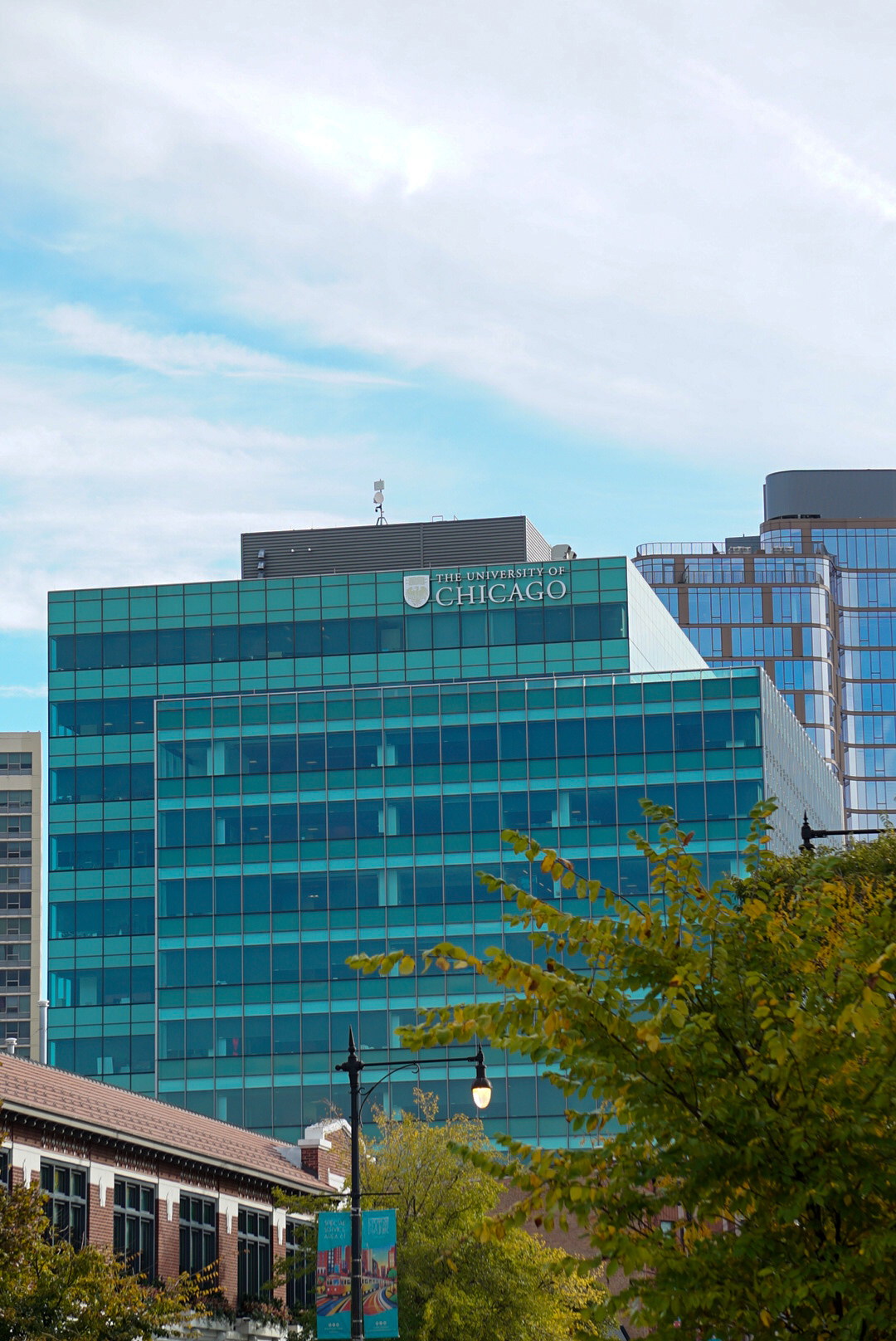

The University of Chicago owns about 400 properties.
About 80 percent of them are tax-exempt, according to a Maroon analysis of Cook County’s property tax and parcel data.
Most of the University's tax-exempt properties
are academic buildings, but its hospitals are
also exempt.
In Illinois, hospitals
qualify
for tax exemption if the value of certain
services or activities, such as charity care or
health services to low-income and underserved
individuals, amounts to their estimated property
tax liability.
For example, UChicago Medicine invested more
than $715 million in community benefits in
fiscal year 2024, including more than $567
million in uncompensated care,
according
to its Community Benefit Report.
University properties, however, do not have such requirements. They are eligible for exemption if used exclusively for school purposes, and without profit-making motives. In Illinois, eligible uses include housing for students, their spouses and children, and staff.
Universities receive tax exemptions because they
provide valuable services to the public, said
Christopher Berry, a professor at UChicago’s
Harris School of Public Policy.
“There's a rationale to it, which is that the
city thinks the thing that they're doing is
providing value unto itself,” Berry added. “I
think in the case of certainly the University of
Chicago, there's a lot of benefits that it
creates for the city.”
But understanding the extent of the University’s
public benefits is a challenging task.
“What are the benefits of providing these
exemptions to colleges and universities? I'm
guessing that pretty often you end up in an
abstract place. You start talking about their
value as job creators, their value as supporting
business activity in your communities,” said
Paula Worthington, a lecturer at Harris.
“The reason those are sort of harder-to-evaluate
claims is that if the University of Chicago was
not in Hyde Park, doing whatever it does,
something else would be happening on those
properties. There'd be other jobs, they just
wouldn't be jobs related to the University. So
what the net impact is is not always easy to
identify and articulate.”
Some academics and community members also point out that universities have significant, and often unchecked, influence on the economic and social landscape of their surrounding neighborhood.
“Few understand higher education’s national role
in the devastating history of demolition and
displacement of stable communities during the
Urban Renewal period," author and urban
historian Davarian Baldwin wrote in his book
In the Shadow of the Ivory Tower.
“When neighborhoods are targeted for campus
expansion, the people who live there face the
enduring trauma of losing their homes and the
physical disruption of their cultural ties."
Additionally, as university activities become
more intricately linked to commercial interests,
their tax-exempt status could become a sharper
point of contention.
“At some point, you are not just a
university—you are also a hedge fund. You are
also mobilizing billions of dollars that you are
profiting off of,” said Wally Hilke, a professor
at the Northwestern Pritzker School of Law.
“When businesses or corporate interests are
profiting, it is fair for the public to ask,
‘How much do we need to be subsidizing these
private interests, and how much should we be
making sure that, like any other project
primarily for private benefit, the interests
that are profiting should pay taxes back to the
public?’”
“No one is suggesting taxing classrooms or charity wards like luxury condos,” Shaw wrote in his op-ed. “But research labs, administrative towers, medical office buildings, parking garages and revenue-generating facilities are fair game for a serious reassessment.”
UChicago’s properties include some mixed-use units.
In Illinois, if exempt properties start being used
for profit, the property owners are required to
notify the Cook County Assessor’s Office.
Then, businesses leasing space from
nonprofits pay a type of property tax called a
leasehold tax.
However, this situation doesn’t happen all the time.
For instance, on East 55th Street, Campus North
Parking Garage is not only a four-level parking
garage.
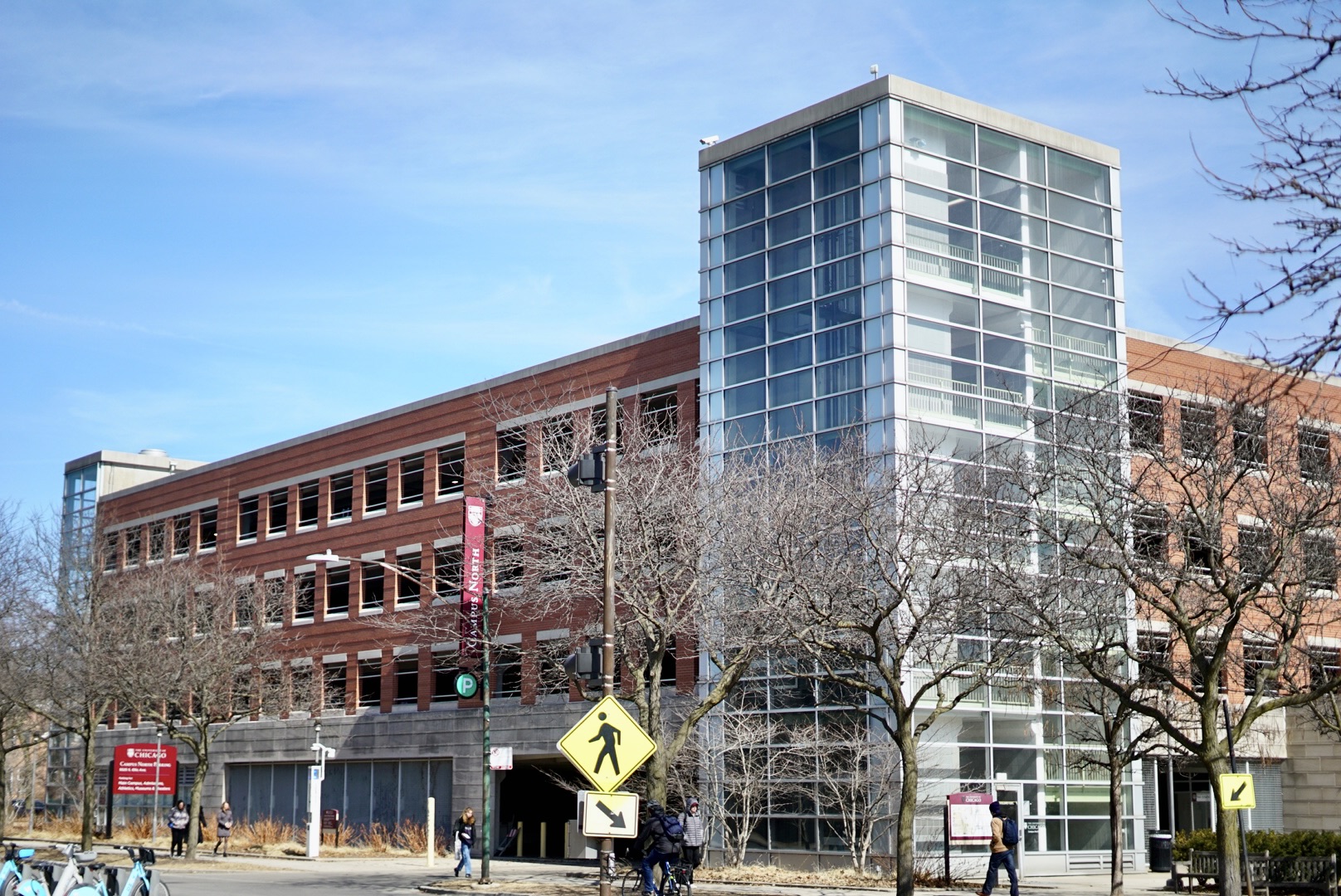 Photo: Damian Almeida Baray
It also houses Roux, a restaurant, as well as Seven
Ten Social, a bar with a bowling alley.
The property remains entirely
tax-exempt.
 Photo: Damian Almeida Baray
In an emailed response to the
Maroon’s questions, a University spokesperson
wrote recently that “this building is primarily used
for parking and office space supporting the
University’s educational mission.”
The University is “assessing the background of this
building’s exemption to maintain compliance,” the
spokesperson wrote.
The Pret a Manger in the Reynolds Club, the
Starbucks in Saieh Hall, and the Chicago French
Press in the UChicago Bookstore are also examples of
commercial activities in buildings that are
tax-exempt.
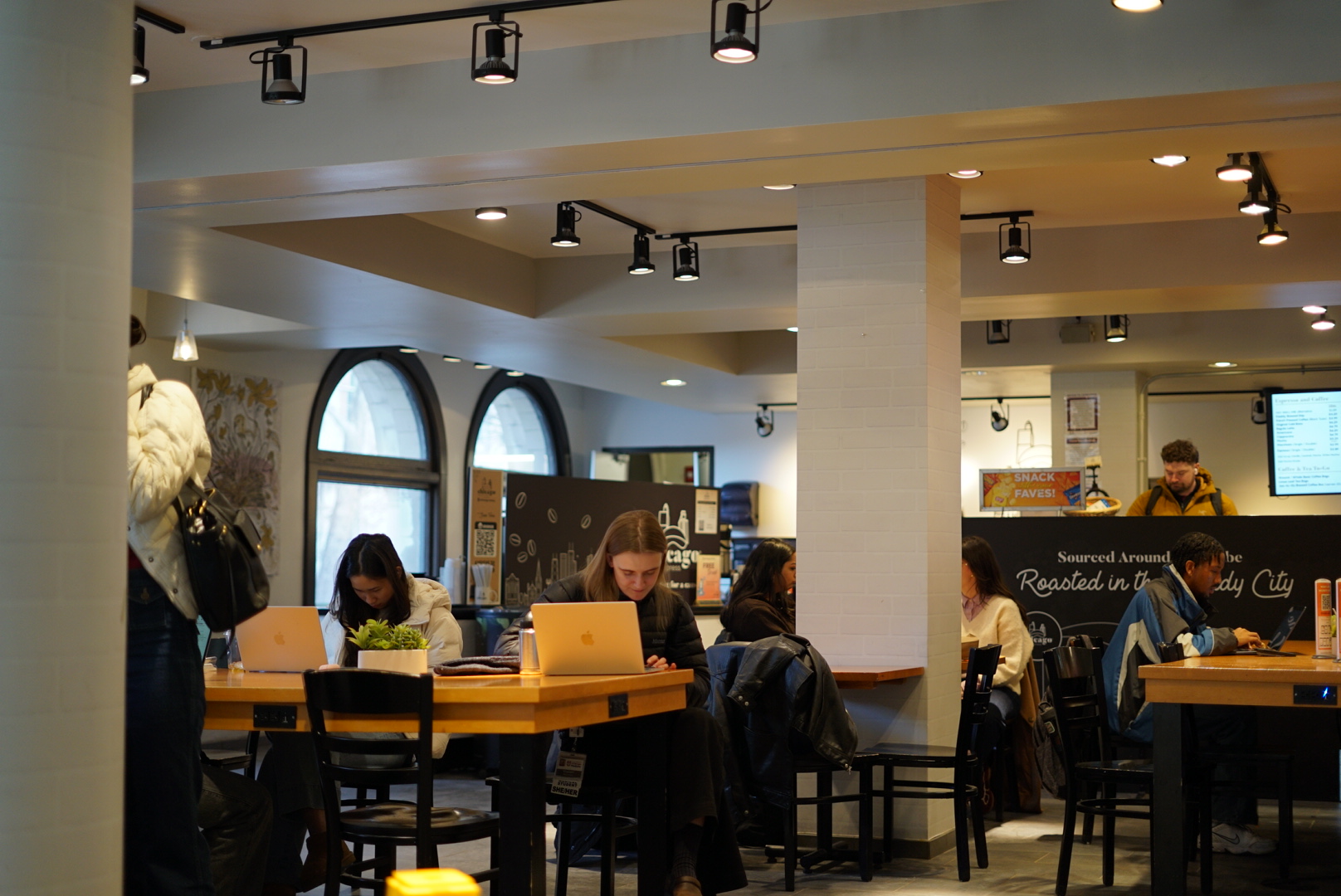 Photo: Damian Almeida Baray
The threshold for exemption is a question of state
law and how the Department of Revenue
assesses
it when entities apply for tax exemption. The
University has contested the decision in court
before.
In tax year 2015, UChicago and Bright Horizons, a
childcare company, sought a property-tax exemption
for two on-campus daycares. This was rejected by the
Department of Revenue in 2016.
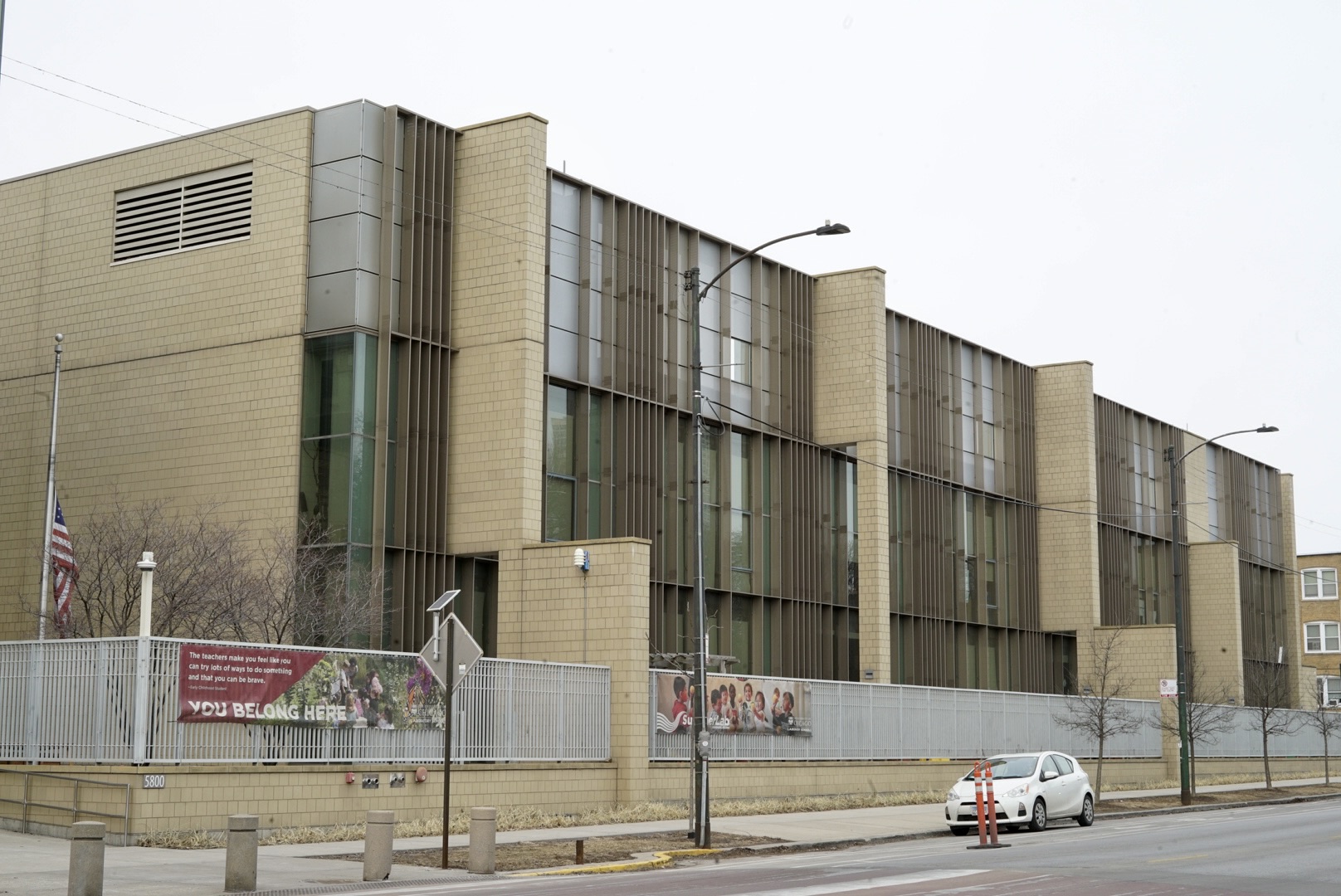 Photo: Damian Almeida Baray
In 2020, the state appellate court upheld the Department's decision, finding that the properties were "used with a view to profit," as Bright Horizons had earned about $940,000 in profits from using them.
There's also the question of unpaid property taxes.
The property occupied by UChicago Medicine in Orland Park, a suburb about 30 miles away from Hyde Park, currently has $1.1 million of unpaid tax bills including interest from tax years 2022 to 2024.
In response to the Maroon's inquiry about the unpaid taxes, the University spokesperson said that the property is owned by the Village of Orland Park and leased by UChicago Medicine.
According to the Cook County Assessor's Office, this property is under a leasehold agreement, meaning that the lessee is the responsible taxpayer.